
The Last Mile of Engineering
Why the real GNC talent gap isn’t in the job titles
There is a particular moment in engineering that is easy to miss.
The simulation is working. The vehicle is moving. The algorithm is doing what it’s supposed to do. The mission architecture looks sensible on the whiteboard.
Then somebody asks the question that matters most: who has actually made this work before?
That question is becoming more important across autonomous aerospace. Guidance, navigation and control no longer sit neatly inside one discipline. GNC touches flight software. Flight software touches avionics. Avionics touches systems engineering. Systems engineering touches test and operations. As more decision-making moves onto the vehicle itself, the distance between an algorithm on a screen and a real mission gets shorter.
The technology is moving quickly. The people are having to move with it.
The shortage isn’t where the job titles suggest
The familiar way of talking about the aerospace skills gap is to count vacancies. There’s value in that, but it can hide the more important story.
A job description might ask for a GNC engineer, a flight software engineer or a systems engineer. In practice, the work increasingly crosses those boundaries. A GNC engineer on an autonomous vehicle needs to understand not just the mathematics of an estimator or controller, but how it behaves on a processor, how sensor timing affects the result, and how the system should respond when the data can’t be trusted. A flight software engineer needs enough GNC fluency to know why a timing decision matters. A systems engineer needs to be comfortable with both to make real decisions about interfaces and verification.
None of this means everyone needs to become a generalist. The most valuable people are often those with deep expertise in one area who’ve developed enough fluency in neighbouring disciplines to understand the consequences of their decisions. The workforce is becoming more T-shaped: deep technical expertise still matters, but the horizontal part matters more than it used to.
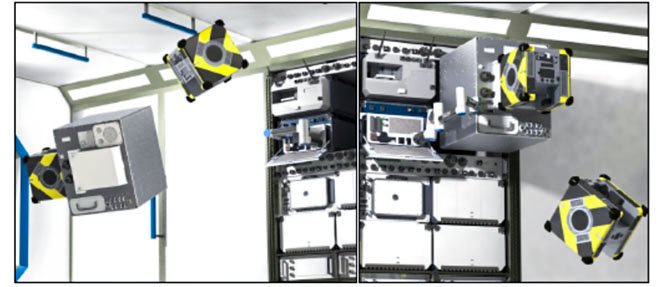
GNC in practice: guidance, navigation and control hardware rarely sits inside one clean discipline boundary.
What the data actually shows
The UK Space Agency’s 2023 Space Sector Skills Survey puts a number on this. Fifty-two percent of responding organisations reported a skills gap. Among those organisations, software and data skills were by far the most commonly cited shortfall.1
Software and data roles accounted for 26% of reported vacancies and systems engineering another 23%, and systems engineering was rated among the hardest disciplines to recruit for, with a mean difficulty score of 4.1 out of 5.1
A second figure is worth sitting with longer: 45% of organisations reported difficulty retaining space staff over the previous year, most often citing poaching by other space companies and low salaries.1
This matters because a workforce gap isn’t created only when a company can’t find someone. It’s also created when the person who already knows how the system works leaves. That knowledge is rarely written down completely: it lives in the engineer who remembers why an interface was designed a certain way, who’s seen a sensor misbehave in hardware, who knows which simulation assumption is probably too optimistic.
That is experience. And experience takes time.
Technical experience vs. mission experience
There’s a useful distinction between technical experience and mission experience. Someone can spend ten years developing algorithms without ever taking one through a flight programme. Someone else may have fewer years on paper but has worked through design, integration, hardware testing and operations on a live vehicle. Neither career is inherently better; they produce different kinds of knowledge.
For autonomous missions, the second kind is becoming more valuable, because autonomy isn’t really a software problem. It’s a systems problem. An autonomous vehicle has to make decisions in the presence of imperfect information, constrained computing and failures the test case didn’t anticipate. That creates a premium on engineering judgement: not just can you design the algorithm, but do you know which assumptions matter, how to test them, and what happens when they’re wrong.
The last mile
There’s a part of the development cycle that deserves more attention: the journey from a technically successful idea to something that can actually be trusted on a mission. Call it the last mile: simulation, software implementation, hardware integration, hardware-in-the-loop testing, verification, fault handling, environmental testing, operational procedures, mission support.
It isn’t glamorous in the way announcing a new autonomy capability is. But it’s where much of the industry’s hardest-to-replace experience gets built, and it’s one reason the workforce challenge can’t be solved simply by producing more graduates. Universities are turning out talented engineers, and that pipeline matters. But you can hire a brilliant graduate this year; you cannot give them ten years of flight experience this year. You can only give them better routes to acquire it faster.
What the industry may be getting wrong
There’s a temptation to respond to a skills shortage by making job descriptions longer: five years’ experience, C++, Python, ROS, MATLAB, Simulink, GNC, embedded systems, hardware-in-the-loop, DO-178C, flight heritage. The list grows, the candidate pool shrinks, and everyone gets frustrated.
The better question is which experiences actually matter for this specific mission. A company building a new autonomous spacecraft doesn’t necessarily need someone who has done precisely the same job before. It may need someone with deep control theory and unusual systems curiosity, a software engineer who’s spent real time close to hardware, or someone from another high-consequence engineering environment who knows what disciplined verification feels like. That doesn’t mean lowering the bar; it means getting better at recognising transferable depth.
SpaceX’s Starlink guidance, navigation and control group is organised into several distinct sub-teams writing the autopilot algorithms for a constellation of thousands of satellites and more than two million ground terminals.2 That scale changes what “GNC engineer” means in practice: current openings span orbital mechanics and state estimation on one sub-team to entry-capsule atmospheric entry GNC on another, each with its own specialism rather than one generic job description.2 It is a live example of the T-shaped pattern this piece describes: deep expertise within a sub-team, with enough shared fluency across sub-teams to keep thousands of vehicles flying as one system.
The human part of the equation
Engineers don’t choose careers from a skills taxonomy. They choose projects, people, and problems worth spending years on. They want to know the work matters, that they’ll keep learning, and that they’ll get to see something they helped build actually go somewhere.
Space has an unusual advantage here: the mission is tangible. An engineer can spend years on something complicated and eventually watch it leave the ground. That sense of purpose is powerful, but it can’t compensate indefinitely for poor management, limited progression, or an environment where people feel they’ve stopped learning.
The people already inside the industry matter just as much as the people trying to enter it.
In October 2024, ESA’s Hera planetary defence mission proved vision-based autonomous navigation in flight for the first time on an ESA spacecraft, and re-tested it successfully during a Mars flyby in March 2025, autonomously locking onto craters and surface features to track its own position with no real-time link to Earth.3 The GNC system was designed and built by GMV, led from Spain with a Romanian engineering team, under ESA’s direction.3 It’s a reminder that the “last mile” this article describes, and the people who can walk an algorithm through it, is not a uniquely American story. Europe is building some of the hardest autonomy in the industry right now.
Building the workforce behind autonomy
The answer isn’t one grand intervention. It’s more practical: more routes into real engineering work; giving early-career engineers proximity to hardware and experienced colleagues; making technical career progression as visible and respected as management progression; letting specialists stay specialists without treating leadership as the only path forward; and building teams where GNC, software, avionics, systems and operations spend enough time together to actually understand one another.
It also means widening the definition of who belongs here. Space needs aerospace engineers, but it also needs mathematicians, roboticists, control engineers, physicists and people who’ve spent years building complex systems in other high-consequence industries. The common thread isn’t the degree. It’s the ability to solve difficult problems carefully, learn quickly, and take responsibility for the consequences.
There’s a difference between having enough CVs and having enough experience. Between knowing a discipline and understanding a mission. Between hiring someone who can perform a task and building a team in which knowledge compounds over time.
Rocberg’s independent compensation work is helping make part of this market more visible: what specialist talent is actually being paid, across regions and sectors, with submissions sense-checked against role, market and region rather than simply aggregated.4 That data matters. But the numbers only tell part of the story. Behind every hard-to-fill role is a programme waiting for someone who can take responsibility for it, and behind every successful autonomous mission is a group of people whose judgement made the technology work when it mattered.
The future of autonomous spaceflight will be built with better algorithms, better software and better vehicles. It will also be built by people. For all the excitement about what the machines are learning to do, the industry is still learning how to build the people who can build them.
[Byline / one line on Space Systems Talent: specialist recruitment for GNC, autonomy and mission-critical engineering, with a link back to the site.]
1. UK Space Agency, Space Sector Skills Survey 2023, full report (PDF)
2. SpaceX, current public GNC Engineer postings for the Starlink and Starfall programmes
3. GMV and European Space Agency, reporting on Hera’s autonomous navigation flight results, October 2024 and March 2025
4. Rocberg, independent compensation and market intelligence coverage